
A mirror that leaves you out
This essay comes from a talk I gave at AI for ALL, Taiwan Festival 2026, at New Taipei City Art Museum on 18 October 2026.
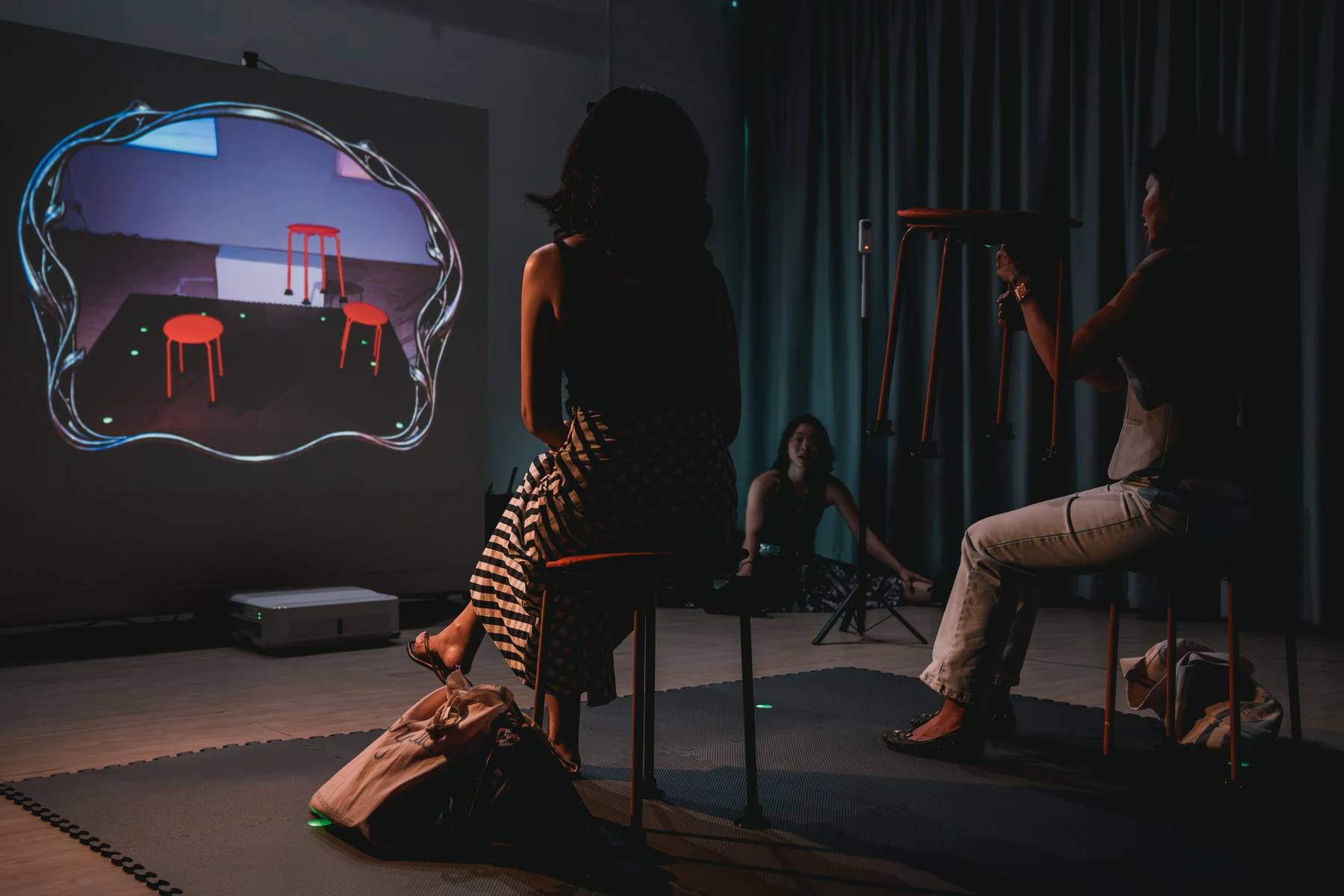
On 2 October, a room full of my friends came to the first public test of a digital mirror I made, at the NAC Arts x Tech Lab at Aliwal Arts Centre in Singapore, and found their reflections missing. The stools were there, the walls were there, the light fell exactly where it should, but the people standing right in front of it were not. Long before that, when I first tried the mirror on myself, I had the same strange feeling. The room looked completely ordinary, except that I was not in it.
The mirror is an interactive AI installation and part of Unsilvered, a body of work I have been building this year about being recorded without being reflected back. The name comes from how mirrors are made. Glass only becomes a mirror once it is backed with a thin layer of metal called silvering. Unsilvered glass is still there and still lets light through, but nothing comes back to you.
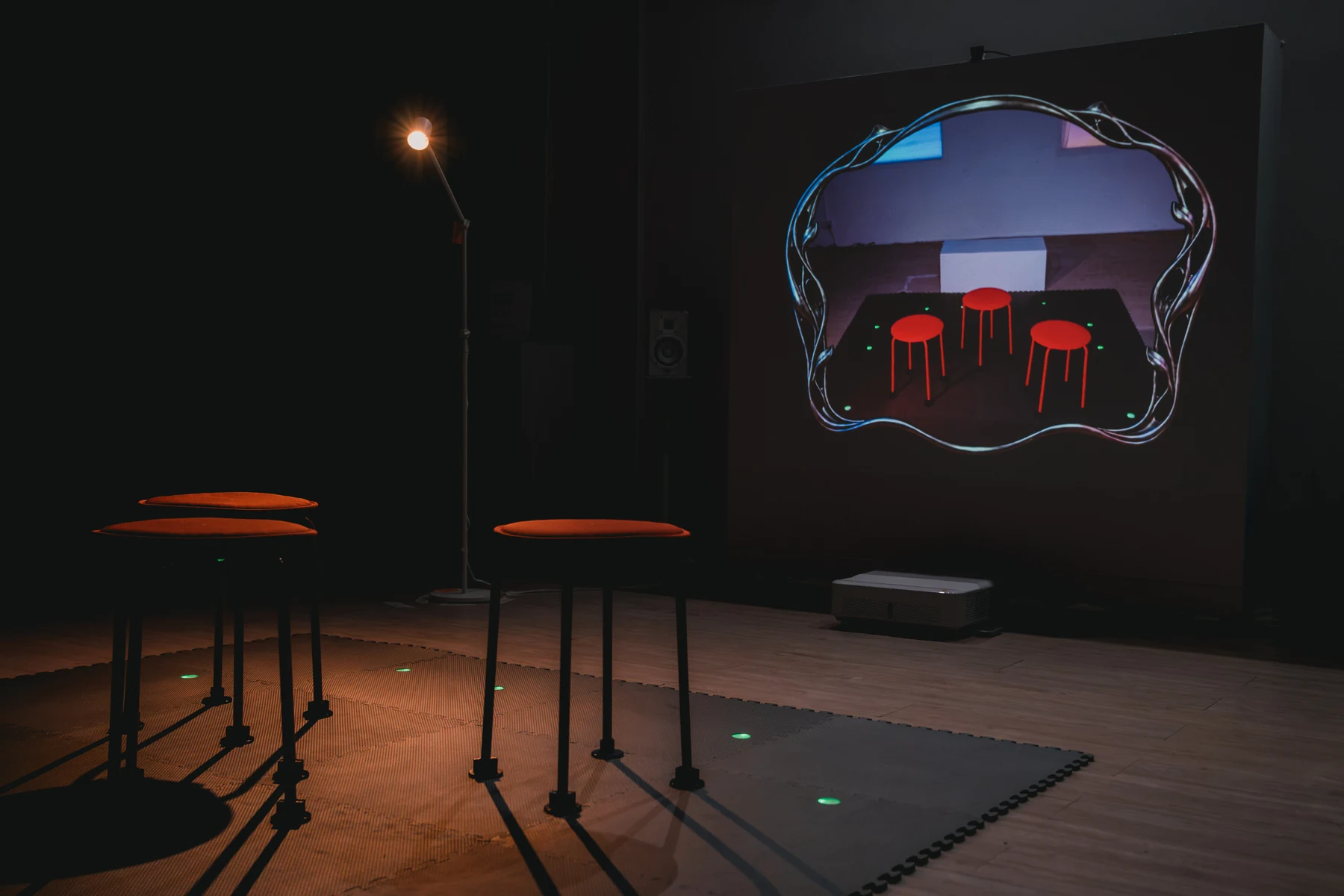
The feeling behind it is that most of us are now watched without ever being seen. For most of history, being recorded came with a trade. If someone painted you, photographed you or filmed you, you at least got to see the picture. Today it is not only cameras, phones and AI systems recording us all day. It is also each other, from the person filming at the next table to the influencer setting up a tripod in your yoga class, and almost none of what they capture is ever shown back to us. A mirror that records you and never shows you yourself felt like the right way to represent that, so I built one.
The mirror does three things to you. It takes away your reflection, it has to find you first, and it keeps track of what you move. Each of those opens a different way of thinking about what it means to be seen, so this essay follows them in order.
It takes away your reflection
My friends were my wonderful guinea pigs, and I fully expected them to find it creepy. Some did. A few told me it felt depressing, as if they had lost part of who they were.
What surprised me was how many felt the opposite. They said it was comforting not to see themselves, that they felt more authentic and less performative, and by the end of the evening there were grown adults sitting on the floor playing with the stools like kids at a playdate.
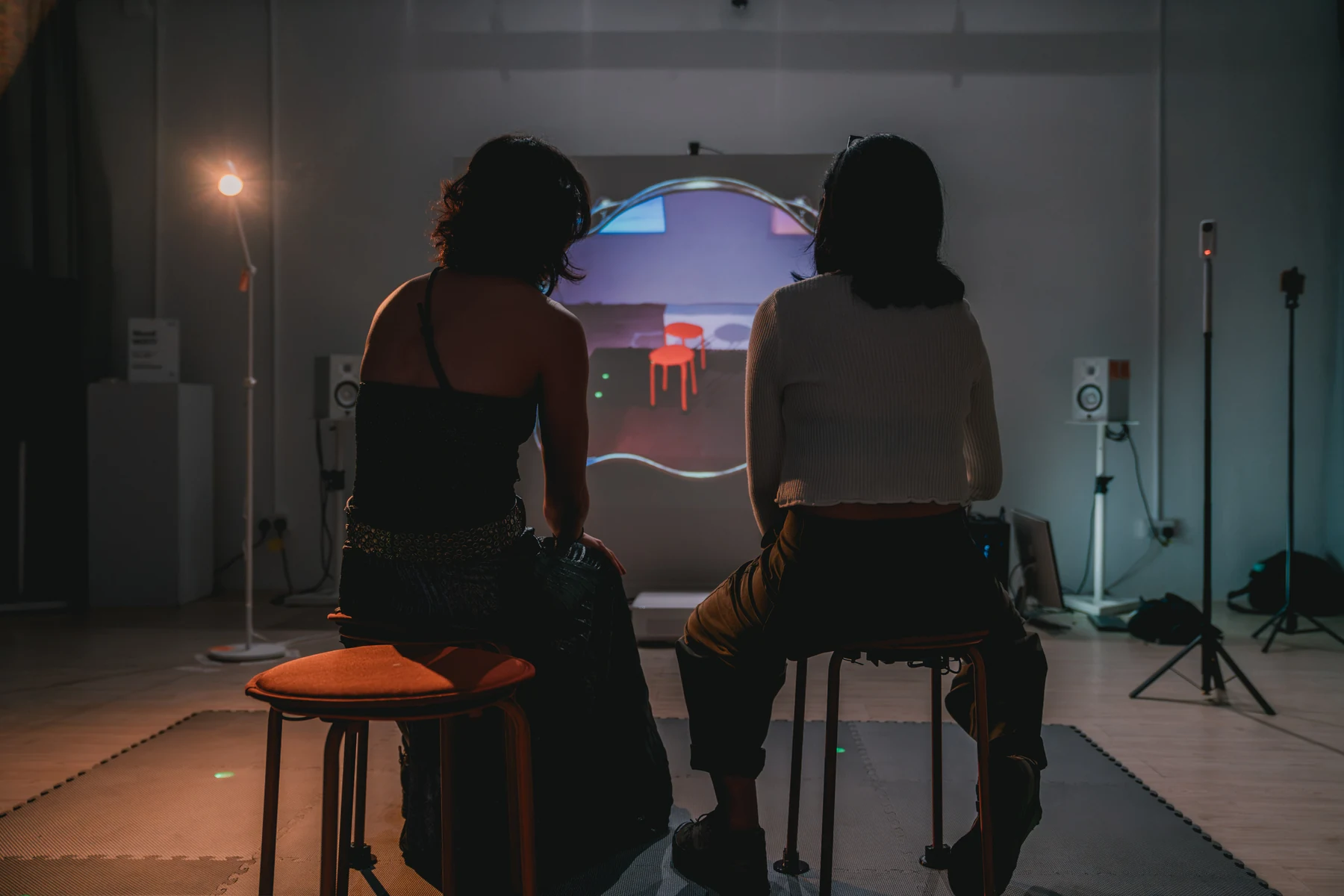
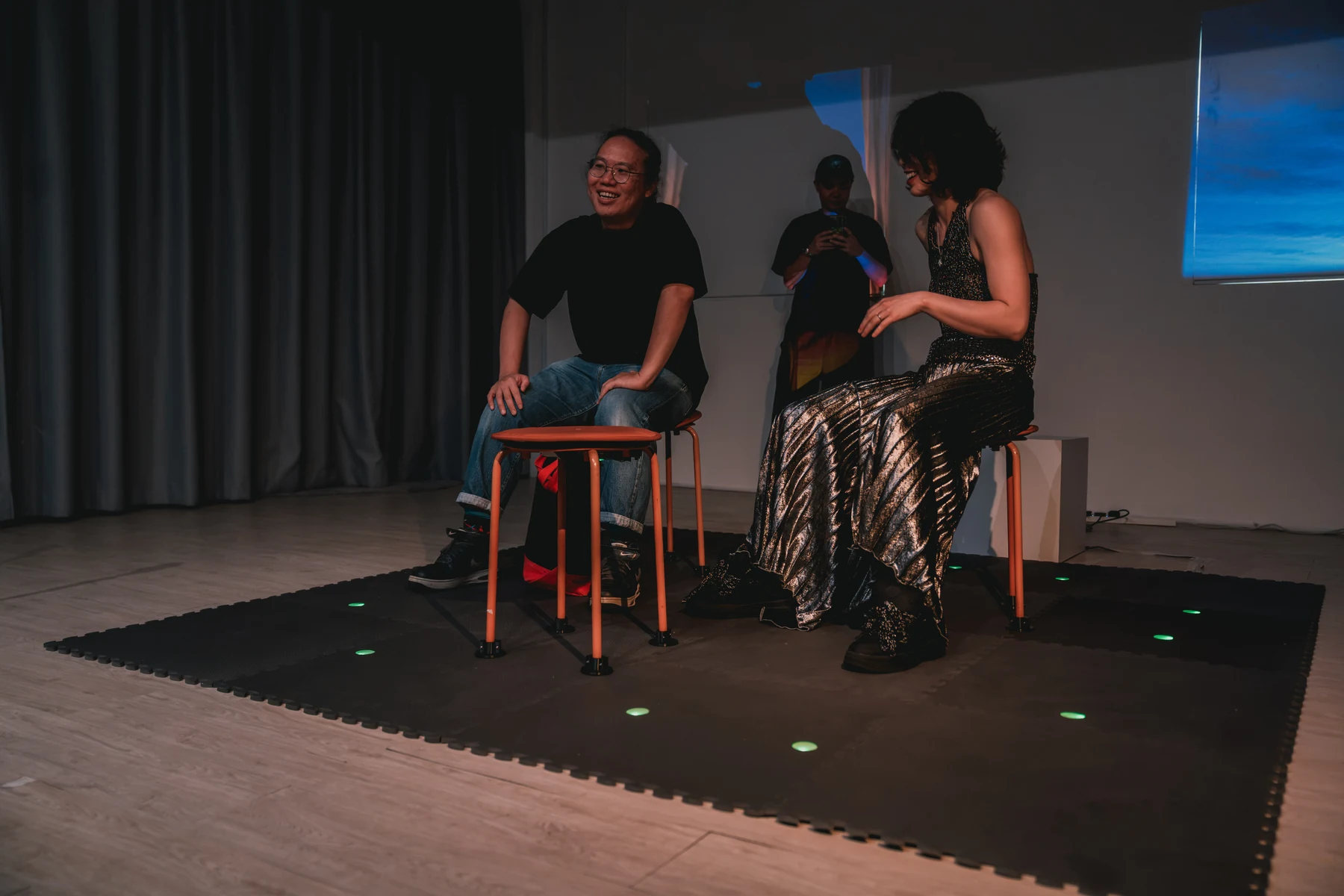
Both reactions make sense once you notice how much work a reflection does for us. Jacques Lacan argued that a baby first gets its sense of "I" from recognising itself in a mirror, seeing a whole, complete image long before it feels whole on the inside. If your sense of self starts as a reflection, then losing the reflection can feel like losing a piece of yourself.
The relief has its own explanation too. John Berger wrote in Ways of Seeing, "Men look at women. Women watch themselves being looked at." He was writing about women growing up as two people at once, one being looked at and one constantly checking how she looks to everyone else, the inner critic. I think a lot of us carry some version of that second person now, and a mirror is where she does most of her work. Every time we pass one we put on a small show, fixing our hair, finding our good angle. My mirror leaves you out, so that inner critic suddenly has nothing to look at, and I think that is the relief my friends were describing.
When I asked my cousin Sharlene how it felt not to see herself, she answered with one word, confident. She may be slightly biased, but she later wrote it down properly. "It made me realise how much we distract ourselves by curating our image (like the self view in virtual meetings). Without seeing my own reflection, my voice and opinions felt so much clearer, free from the noise of expectations." She liked it enough to post about it on LinkedIn, which in my family counts as peer review.
The example she picked turns out to be real research. In 2021, Jeremy Bailenson at Stanford looked at why video calls tire us out. One of the reasons he found is that we spend the whole meeting staring at our own face, which he compared to someone following you around all day holding up a mirror. Nobody would put up with that in an office, and yet we sit through it in every call.
Mirrors have also never been neutral objects, and plenty of cultures have stories about what a mirror can do that we cannot see. In many Chinese homes, a bagua mirror hangs above the front door to turn bad spirits away. Jewish families sitting shiva cover the mirrors in the house, and Victorian households in England did the same after a death, out of a belief that a mirror could catch a soul on its way out. In folklore, a vampire casts no reflection at all.
So perhaps it is no surprise that when I first shared a video of an earlier version of the mirror in its ornate frame, my European friends decided I was a vampire (I am not), and my Singaporean friends decided it was about surveillance. At the showing, one visitor told me the room simply made her feel like a ghost. Same mirror, very different monsters. Whether being left out felt like a loss or a relief seemed to depend less on the mirror than on what each person brought to it.
Same mirror, very different monsters.
It has to find you first
Here is how it works, minus the hour of calibration. The room needs a camera, a projector, a computer running the system, and three IKEA stools, each with an Antilatency tracker hidden underneath so the computer always knows where it is. The camera films the room nonstop. An AI model trained to pick out people finds everyone in each frame and traces their outline, and inside that outline the system puts back the same patch of the room from a recording I made before anyone arrived. Wherever you stand, the mirror shows the empty room instead of you. The stools are never filmed at all. They are 3D models, rendered wherever their trackers say they are, so they move when you move them while you never show up.
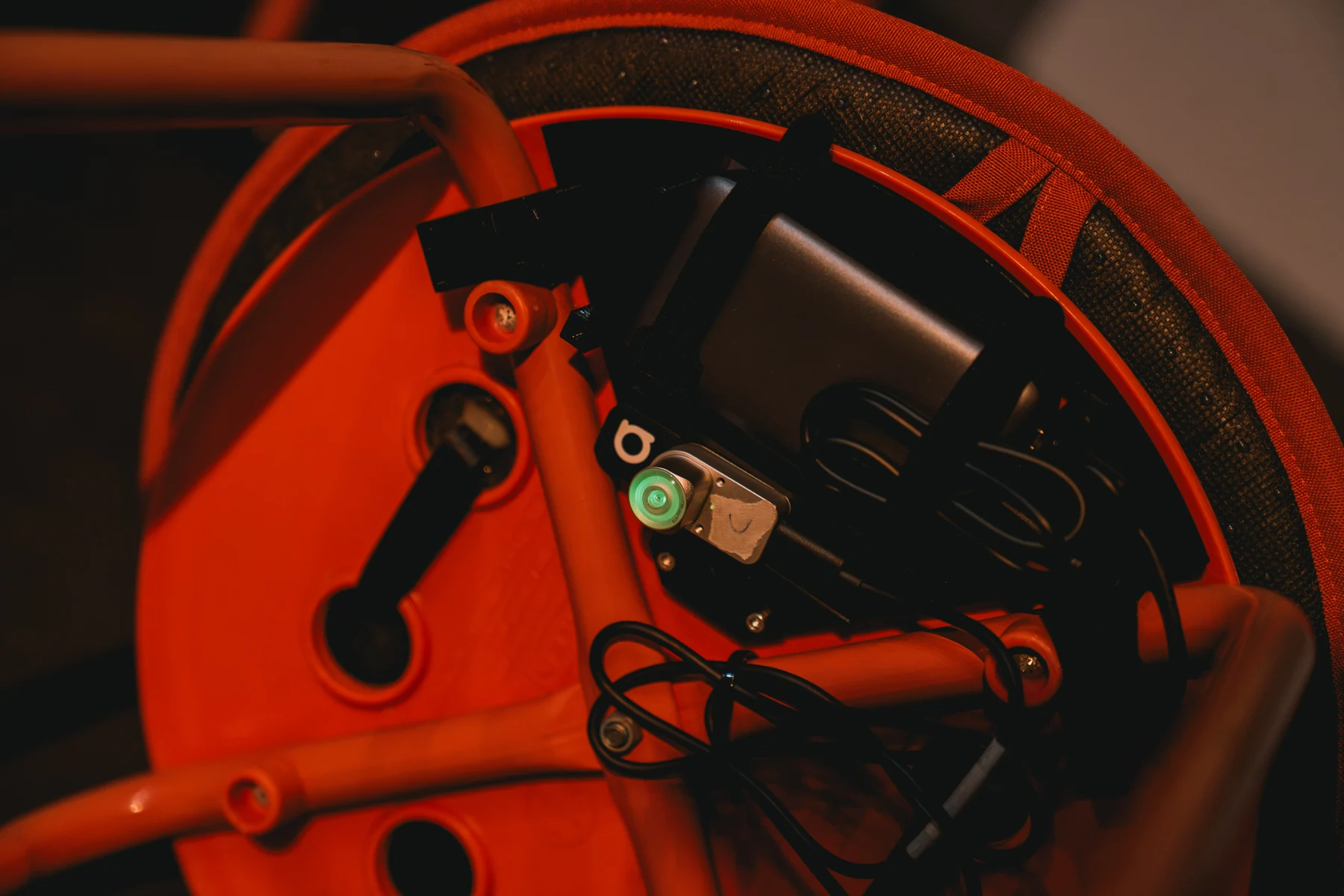
So the system has to find you before it can leave you out.
In every frame it looks for you first, and only then takes you away. Privacy tools often work like this too. Before Street View can blur the faces in its images, it has to find every one of them.
There is a famous prison design called the panopticon, drawn up by Jeremy Bentham in the late 1700s and later made famous by Michel Foucault. The cells form a ring around a guard tower, so the prisoners can always be seen but can never tell whether anyone is actually watching, and they start watching themselves. In my room the arrangement is flipped. You can see exactly what the system sees, and you are not in it. Instead of tensing up, people relaxed. If people relax most when they cannot see themselves being captured, then the most comfortable kind of watching is the kind that never shows us what it took, and a lot of the technology in our pockets already works that way.
The system also has a fixed definition of a person, and that definition stops at the edge of a detected body, so when you disappear, your shadow stays behind on the floor. As far as the system is concerned, a shadow is not a person.
My mum liked the shadow the most. She said it reminded her of how surveillance looks at us and judges us from our data. The data is something real of us, but in the same way a shadow is not a whole human being, the data is never the whole person either.
The stools have a blind spot of their own. The tracker under each one works out where it is by looking down at markers on the floor, so when a visitor turned a stool upside down, the tracker lost the floor and the system kept the stool exactly where it had last tracked it. On screen it hung frozen in mid-air with nobody holding it, until they flipped it back over and it snapped into place. The shadow and the floating stool are really the same mistake. The system can only follow things in the one shape it was built to expect, a person inside the outline of a body and a stool standing on its legs. Every AI system has edges like these. They are just usually much harder to see.
It keeps track of what you move
One visitor stood in front of the mirror and asked, "Do I really matter? Or do my actions really matter?" Then they looked at the stool and answered themselves. "I guess it does, because it moves the chair." The mirror would not show them that they existed, but it did show them what they had done.
Afterwards, a few of us agreed on something slightly absurd, which is that inside this mirror the stools are more real than we are. Each stool has what engineers call a digital twin, a 3D copy inside the computer that holds exactly where the real stool is and which way it is facing, updated ten times every second. We get no copy at all. As far as the system is concerned, a person is a hole in the picture that it patches over with the empty room.
I think that is quite close to how most of the online world already knows us. A platform like Instagram or TikTok does not really need your face. It builds its picture of you from what you do, what you click, what you buy, what you skip and how long you pause before you scroll past. It knows you from the chairs you move.
People once hoped that a system which simply ignored who you are, your gender or your race for example, would treat everyone fairly. Researchers call this fairness through unawareness, and it does not hold up, because what we do gives us away anyway. Amazon built a hiring tool that was never told which applicants were women, and it still learnt to mark down CVs containing the word "women's", as in "women's chess club captain", before the company scrapped it.
My mirror ignores everyone completely, so I went back to see what it actually kept. While the doors were open, from 2 to 9.30 pm, the system's own log recorded where every stool was ten times a second, 765,949 rows in all, and held no record of the people who moved them. (The room was filmed separately for documentation, and everyone was told.) By the end of the day, my mirror had a far more detailed record of three IKEA stools than of any person in the room, even though every one of those rows was a person's decision.
What people brought
Over one evening, the same mirror was a vampire's mirror, a room for ghosts, a surveillance camera, a rest from the inner critic, a loss of self, and a very thorough diary about stools. It did exactly the same thing to every person who stood in front of it. What changed was what each of them brought.
My own reading, for now, comes from the one thing almost everyone did, whichever way they felt. They moved the stools, as if to check that what they did still counted. I do not think people wanted to be watched less, or more. I think they wanted to be seen on their own terms.
Unsilvered goes on from here. The Mirror builds the same system into a framed screen that looks like a mirror, and The Waiting Room is a proposal where conditions decide whether you appear on screen at all. Before either of those, I want to know whether people elsewhere bring something different. My earlier project, Meet Eva Here, taught me that people meet these systems through the culture they grew up in, which I wrote about in There Is No Universal User. Singapore gave me one set of answers, and I would love to see what Taipei, or anywhere else, does in front of the same mirror.
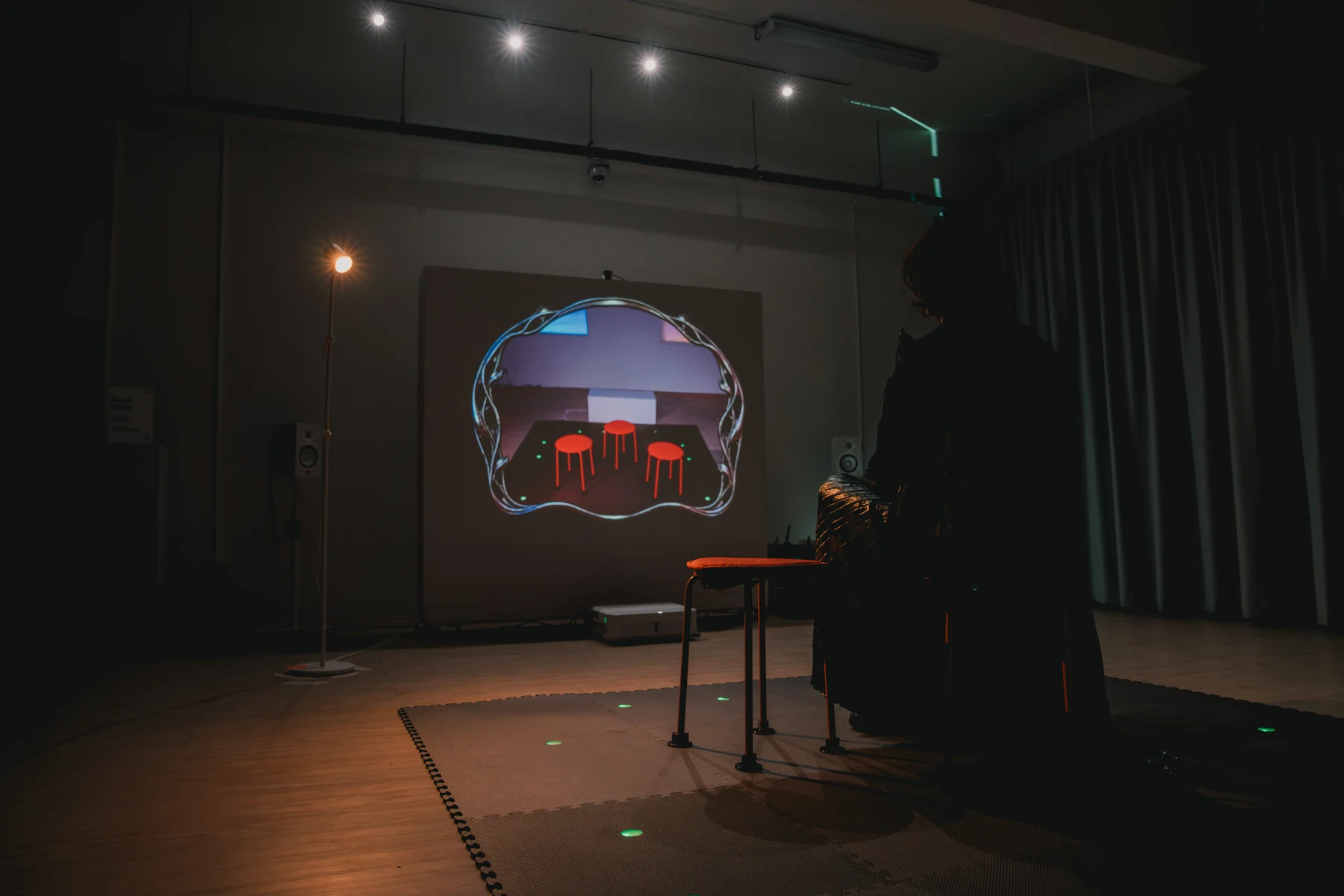
If you have a space where this mirror could go, I would love to hear from you.