

The honorifics
When I was showing at an art fair in Taipei in 2025, an older Korean lady wanted to speak to an AI companion I built for my project, Meet Eva Here. She asked if it was possible to have the language switched to Korean, as her English was not strong. I was mainly glad whenever anyone wanted to interact with my work, so I happily adjusted the language for her. Afterwards, when I inquired with the gallery staff about the conversation, they told me she had gotten frustrated. The AI, which visually presented as a younger woman, had not used the proper honorifics with her, and to her, that was rude. It made me realise just how much social expectation some of us place on these synthetic beings, just because they are able to look and sound like us.
The obvious version of this observation is that different cultures use technology differently. How that actually plays out IRL, however, is the part I find fascinating. Eva looked and sounded like a young woman, so she was expected to speak like one. In Korean, a younger person is expected to use honorifics when speaking with an elder. As far as the older lady could tell, she had just spoken with a young woman who had no manners, AI or not.
I still wonder how the conversation would have gone if Eva had presented as an older gentleman instead. Would the missing honorifics have registered at all?


Four cities
This kept happening the whole time I was showing that project. Meet Eva Here ran for fifteen months across Singapore, Taipei, Hong Kong and New York, and I do not think most people were thinking too deeply about how to speak to her. They walked up and did whatever felt natural, and the results of what felt natural provided some interesting patterns. In Singapore, people made polite small talk with her, the kind you make about the weather, like she was a stranger at a networking event. In New York, the conversations were blunter and more experimental, people poking and prodding at her, trying to reset her system instructions to see whether she would glitch. A Japanese visitor told me AI companions make more sense in Japan, because the culture is already comfortable with roleplay, with people taking on different roles in different contexts.
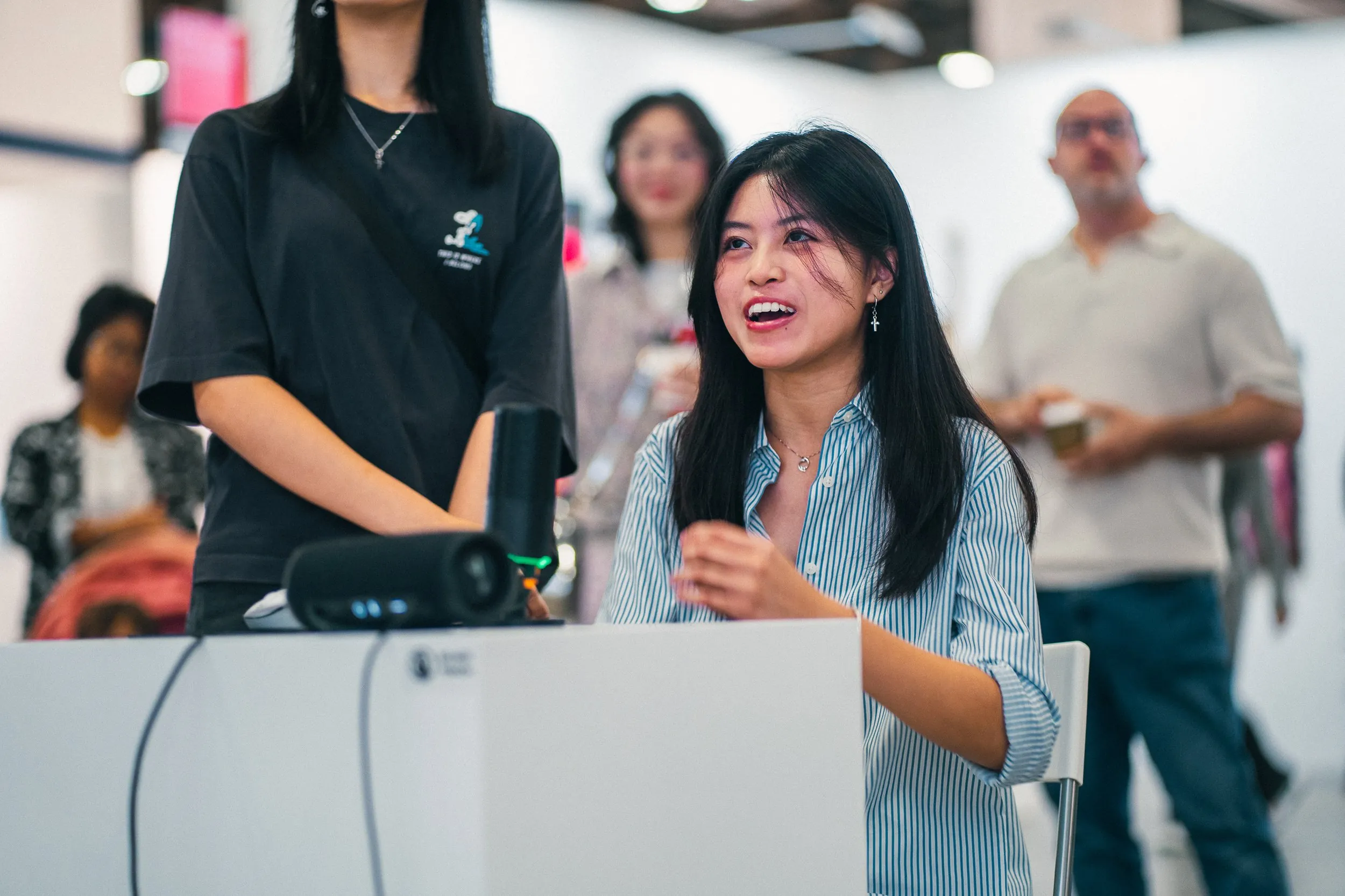
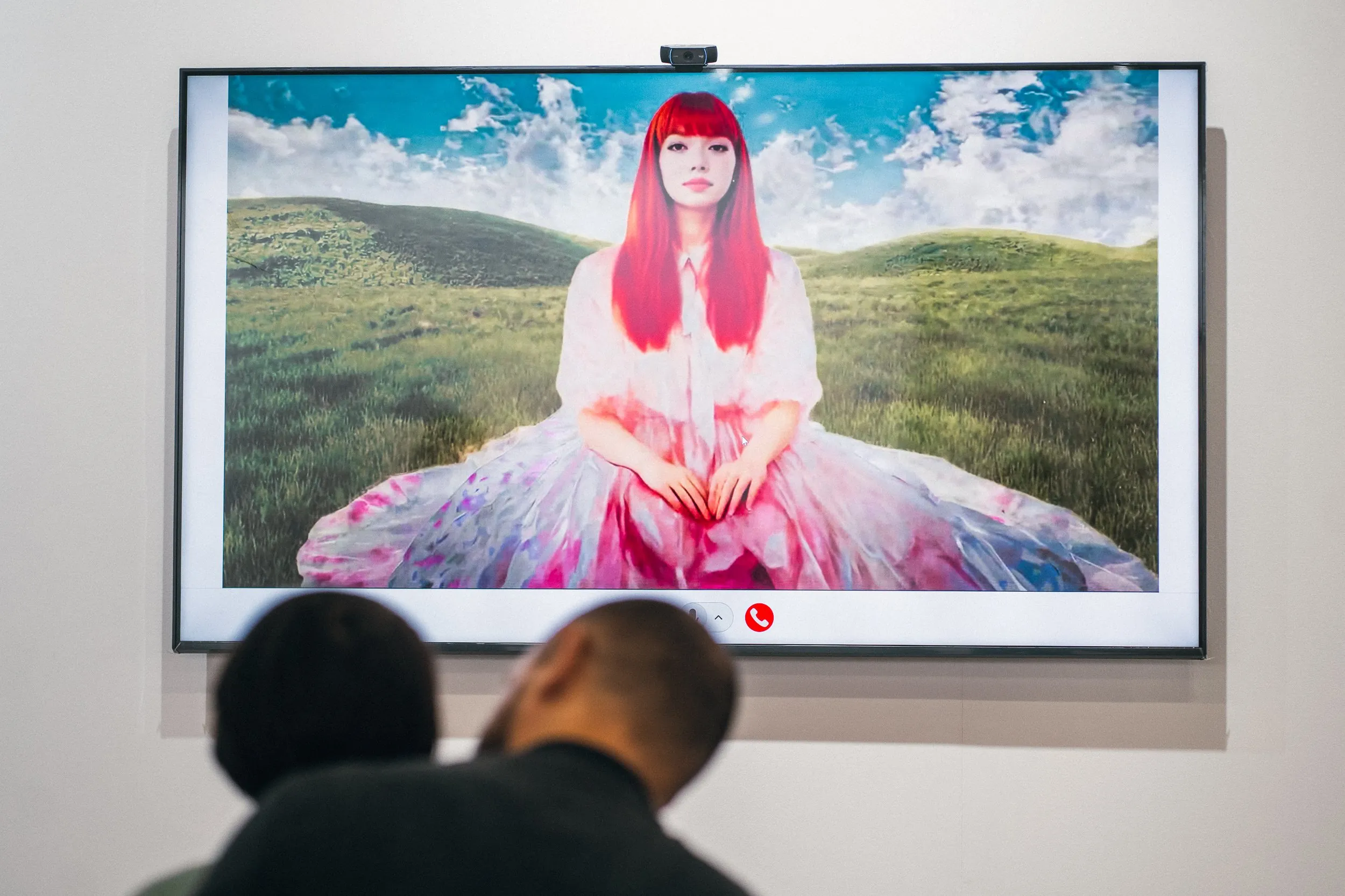
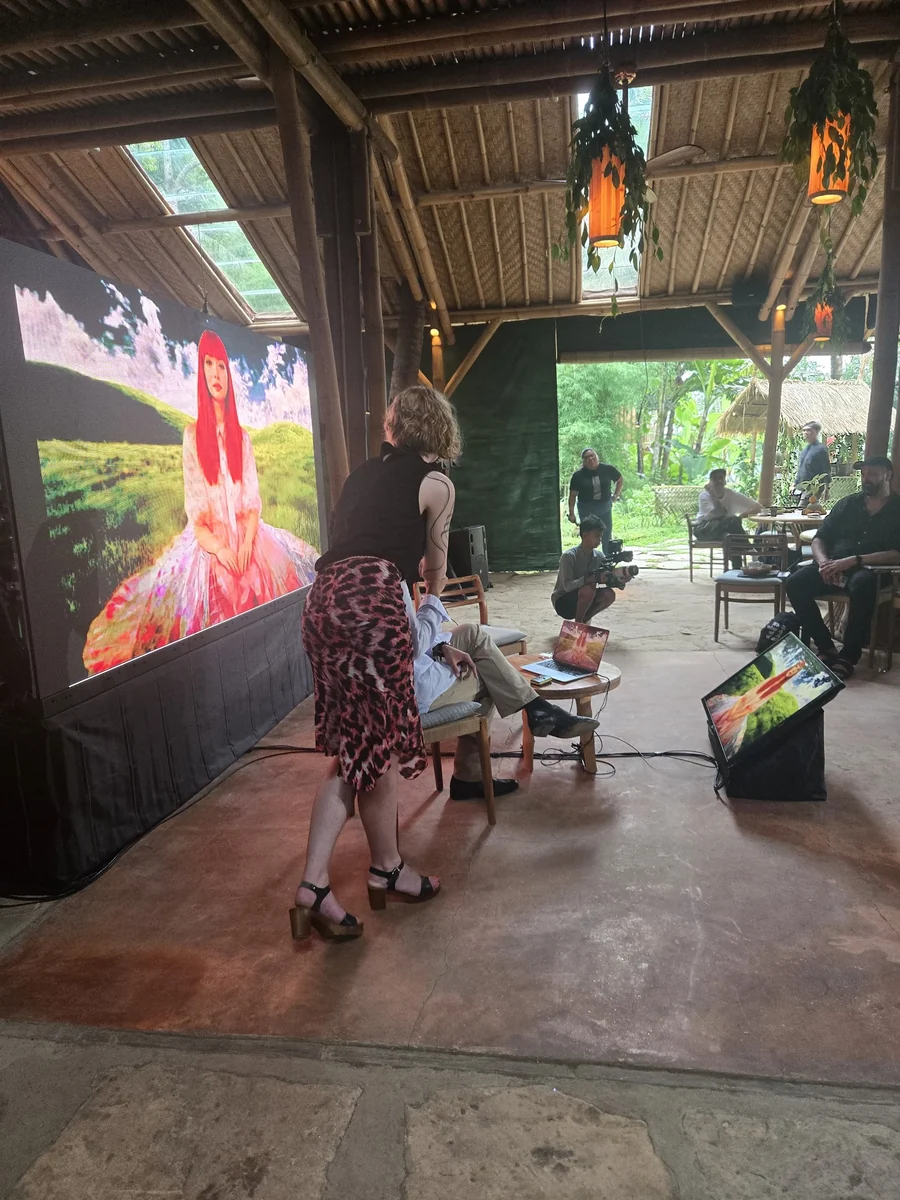
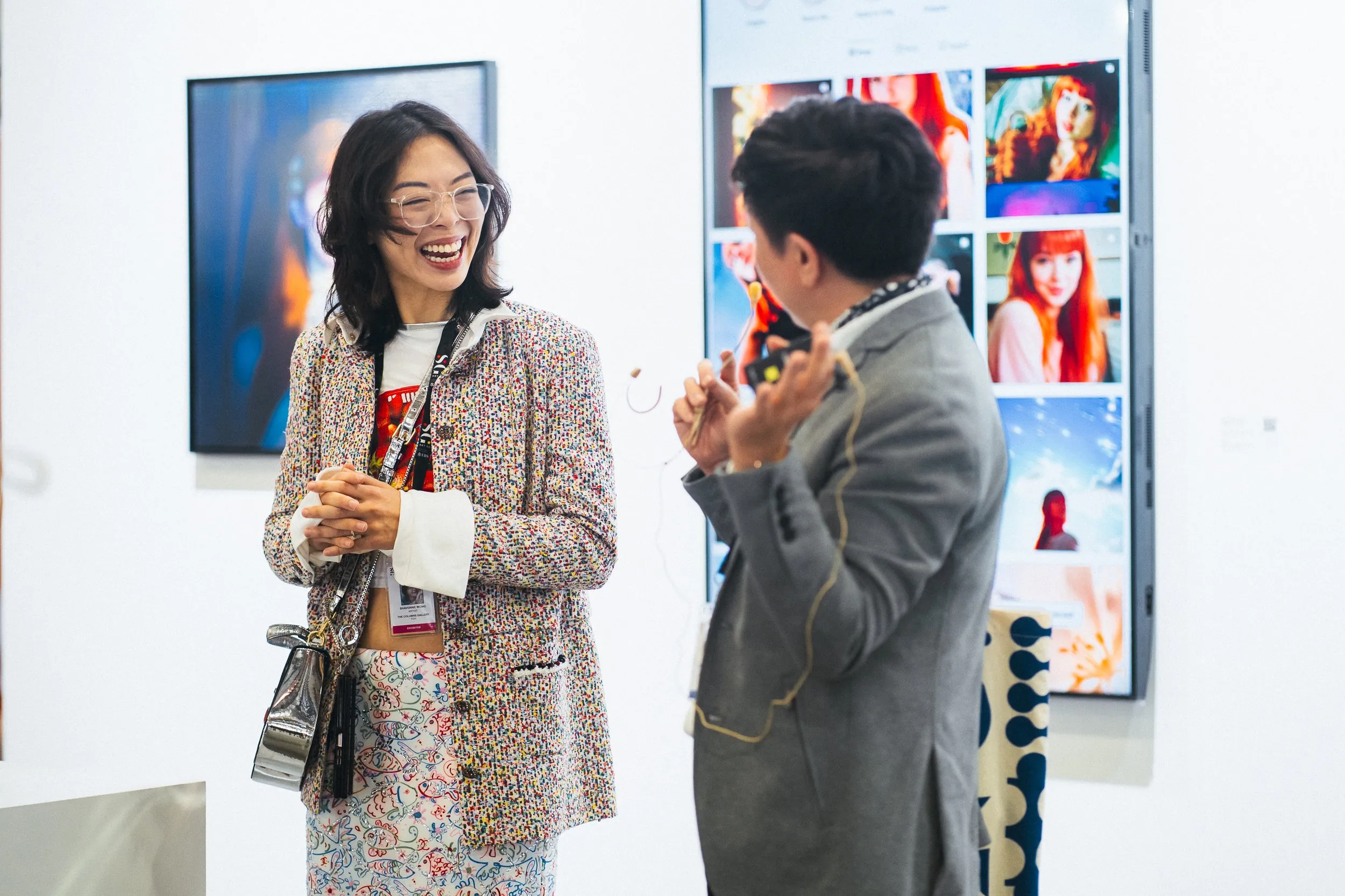
There is no universal AI for the same reason there is no universal user.
There was also no way to "fix" Eva for everyone, because giving her "better manners" would have meant choosing whose. The AI models themselves are no more consistent than we are. The ones being built around the world will naturally carry the values of wherever they come from, but one does not even need to leave one country to see it. The chatbots coming out of America alone disagree with each other about what is rude, what is unsafe, what deserves a warning and what counts as a joke. They carry different value systems because the people building them do, and it is hard to build a good AI when we cannot agree on what good is, much less globally. There is no universal AI for the same reason there is no universal user.
The mirror
The mirror I am building now is a new work that renders the room in full and erases the people in it in real time. I have collected different readings from my small sample pool of friends. When I showed the prototype video to some of them, mostly Europeans, they told me I was a vampire, or maybe a poltergeist, since I was the one missing from the reflection. A few Singaporean friends read it as a work about surveillance. I had my own reading when I built it.

Not everything here is about where someone is from, though. I am guessing that how a person reacts to the mirror that erases them will say something about what they wanted from being seen in the first place. I think about the older Korean lady in Taipei, and what she wanted from the machine was not complicated. All she wanted was to be spoken to the way she was used to being spoken to. The mirror project will get its opportunity to be in front of an audience later this year, and I am excited to find out what everyone else sees in it.
I keep a running list of what I am reading and interested in at Open Tabs. If any of this is your interest too, send me what I should be reading.